
On Letting Go
By graham b. mcbride
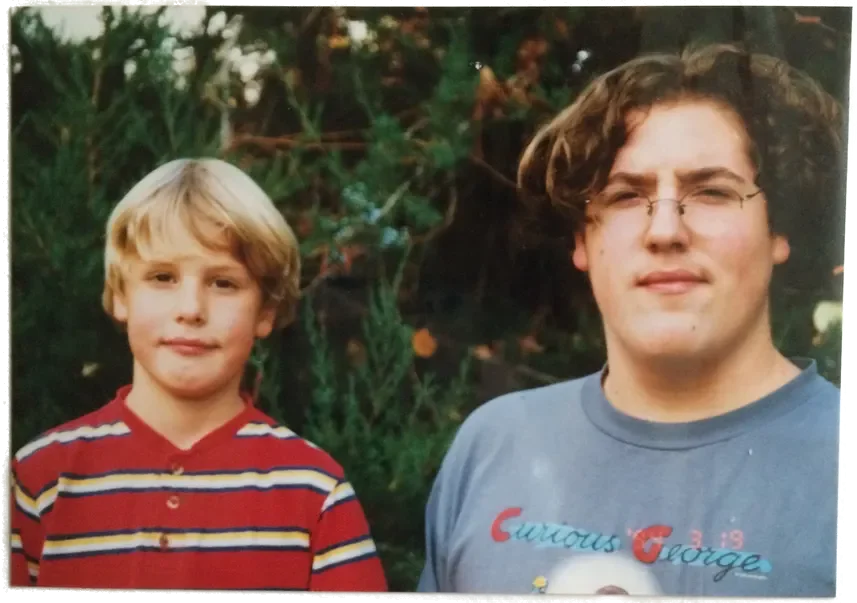
At the age of 42, Ashton, my elder and only sibling, very suddenly and unexpectedly died. They went to bed one night and didn’t wake up the next morning. They had untreated health issues and lacked the resources to manage them. It was an undeserved tragedy. I was crushed. But overwhelmingly, I was dumbfounded that they were capable of dying. At some level I understood that they were a mortal being, but to me they had superhuman-qualities that had been imprinted on me since I was a baby. Around the same time I learned that Ashton didn’t disappear during a game of peekaboo I concluded that by extension, Ashton would always be a permanent fixture in my life–and I never questioned it. Sometimes people ask me about the last time I saw them, and honestly, I don’t remember. My relationship with them during the final years of their life was fractured, and we had drifted apart. I saw them as a sort of Byronic hero—brilliant and passionate but with a tortured resignation towards life that I found challenging and difficult to be around. Despite our differences, there was an unwavering love and siblinghood between us that I knew I could always depend on. They understood the complexities of our family and upbringing like no one else. In my imagination, Ashton was always going to be there. It hadn’t occurred to me that they could die. It never entered my mind.
Ashton and I were born nine years and sixteen days apart from one another. Nine years is a big age gap, but it was the sixteen days that were the most significant for us. For a fortnight, we were ten years apart in age. It was a special couple of weeks of the year—something with meaning only to us. The first year after they died, their birthday was, of course, a hard day. What was even harder for me, though, were the days that followed. Those sixteen days between our birthdays have an outsized importance to me, and now, to me alone. For the first time, we stayed nine years apart. Then on my own birthday that year, we were only eight years apart. Time stopped, and then it started moving backwards, and now, every day, the gap between our ages gets slimmer and slimmer. It was one of the countless ways their passing has changed my perspective on everything.
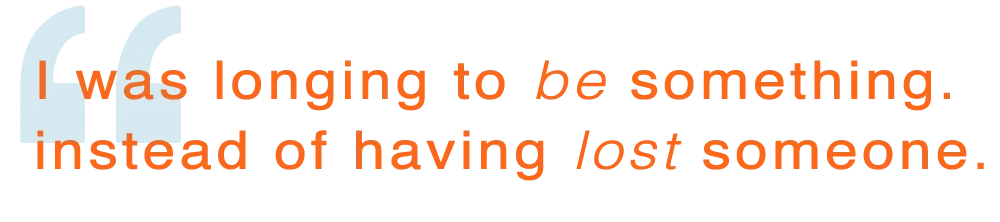
Being almost a decade apart, we had different cultural touchstones. When they got their first job, they paid for our family to get cable so they could watch Daria and Celebrity Death Match on MTV. I had a Netflix DVD-by-mail subscription in high school so I could watch avant-garde art films that I couldn’t find at Hastings. They liked to play video games and D&D; I preferred to read and get high with my friends. They liked to draw, and I took photographs. They exclusively wore sweatpants until they got their first girlfriend, who insisted they start wearing jeans. I’ve always been a clotheshorse and would wear sportcoats to school. Surprisingly, considering our lack of similarities in aesthetics and preferences, Ashton and I both shared a love for jazz standards—the so-called “Great American Songbook,” mostly consisting of songs written for Broadway plays and Tin Pan Alley earworms by heavy-hitters like George Gershwin, Cole Porter, and Irving Berlin. I learned an appreciation for them during the years I took ballroom dance. Ashton learned all the hits while working in a high-end grocery store that only played jazz music.
I have a fond memory of hearing Frank Sinatra’s version of “It Never Entered My Mind” come on at a party I was at with them, and the joy we shared when we realized we both knew the lyrics by heart and sang it together. The song is from the 1940 Rodgers and Hart musical Higher and Higher, which neither of us had ever seen—and honestly had never even heard of. It’s a show tune—a love song, but it’s devastatingly sad. The song is about loss and the denial that comes with grief—the shock that you could really lose someone forever. The lyrics describe a day when the subject would, among other things, “wake up with the sun and order orange juice for one,” admitting that “it never entered my mind.”
There is no word in English for losing your sibling. I initially struggled with the lack of language. I remember frantically googling for a term, or even a good reference that I could use as an explanation of my pain. Overnight I went from being somebody’s little brother to being my family’s only living child. It was hard to wrap my head around the fact that I’m the only one left at the “kids’ table.” I was longing to be something instead of having lost someone. Accepting their death and letting go of the longing I had for them felt like I was losing them all over again. When I talk about my family with a new acquaintance, the most interesting fact they walk away with about my sibling is that they’re dead. The only follow-up questions are usually just about our relationship and the circumstances of their passing, which is not a conversation I like to have when I’m first meeting someone. Ashton went from a vibrant, complex person to a sad couple of sentences that I try to hurry past and change the subject from. I had never imagined they’d be reduced to that. It never entered my mind.
My parents have both been practicing Buddhism for decades and raised Ashton and me with the Dharma. Unlike many of my peers, while I was growing up I was spared the fear that I could be condemned to eternal damnation. To oversimplify it, Buddhists believe in hell realms, but more importantly, we understand that as people we are often living in our own internal hell and that it is by our own design. Anger, greed, and delusion distract us from finding peace within ourselves and keep us fumbling over attachment to expectations that are ultimately unsatisfying. Our condition is impermanent and ever changing. There is no fixed way things “should be”—the only reality is the way things are right now. I’ve heard that messaging my whole life, but it takes daily practice to convince myself of it.
I was recently taking a walk with a guy I’m getting to know. He asked me how often I think about my sibling since they passed. “Every day,” I replied. “I think about them more since they died than I did while they were alive.” My love for them will never fade, but every day I have to remind myself that they are gone. I sometimes see them in the backs of strangers, or hear their laugh radiating from a crowd. There’s always a jolt when I do, followed by an acknowledgment that it couldn’t be them. Feelings of resentment, anger, and sadness come bubbling up to the surface. I often have to fight back tears when people talk about their own siblings. I believe I will carry those emotions with me forever, but as I continually work towards acceptance, the pain it brings softens. Death is, of course, the ultimate reminder of impermanence. In an instant, any constructs you built around that person crumble.
I’ve often heard the expression “that wasn’t on my Bingo card” used to describe an unexpected event or outcome. I find it to be a comical position to take. Bingo is a bit of a reflection of life. Even if I study the card closely, the numbers that are called out may not seem strategic. What’s on my Bingo card is only meaningful if it lines up with what’s on the ball. Sometimes I get a Bingo, but usually I get a scattershot of daubed-out squares that don’t add up to much. It’s a game of chance that’s only fun if you’re willing to accept that you usually won’t win and that no matter how much you play, you’ll never get better at it. I didn’t think Ashton’s passing was on my Bingo card, but it was, and it was called earlier in the game than I would have liked.
After releasing some of Ashton's ashes into the ocean, I recorded this video of the waves.
Recontextualizing my life without Ashton has been a crucial component of my healing. Letting go of what was and instead adopting a framework based on what is has been impactful. The Bingo cage of life will never cease to roll out new challenges, but resiliency comes from openness and from trusting in the unexpected. Wallowing in suffering is choosing to live in hell. Being able to acknowledge the pain that arises and letting it pass rather than succumbing to it is a powerful result of acceptance. I thought letting Ashton go was giving up. I didn’t realize I would find solace in loss, it never entered my mind.