
The House That Idaho Built: Lava Stone
by graham b. mcbride
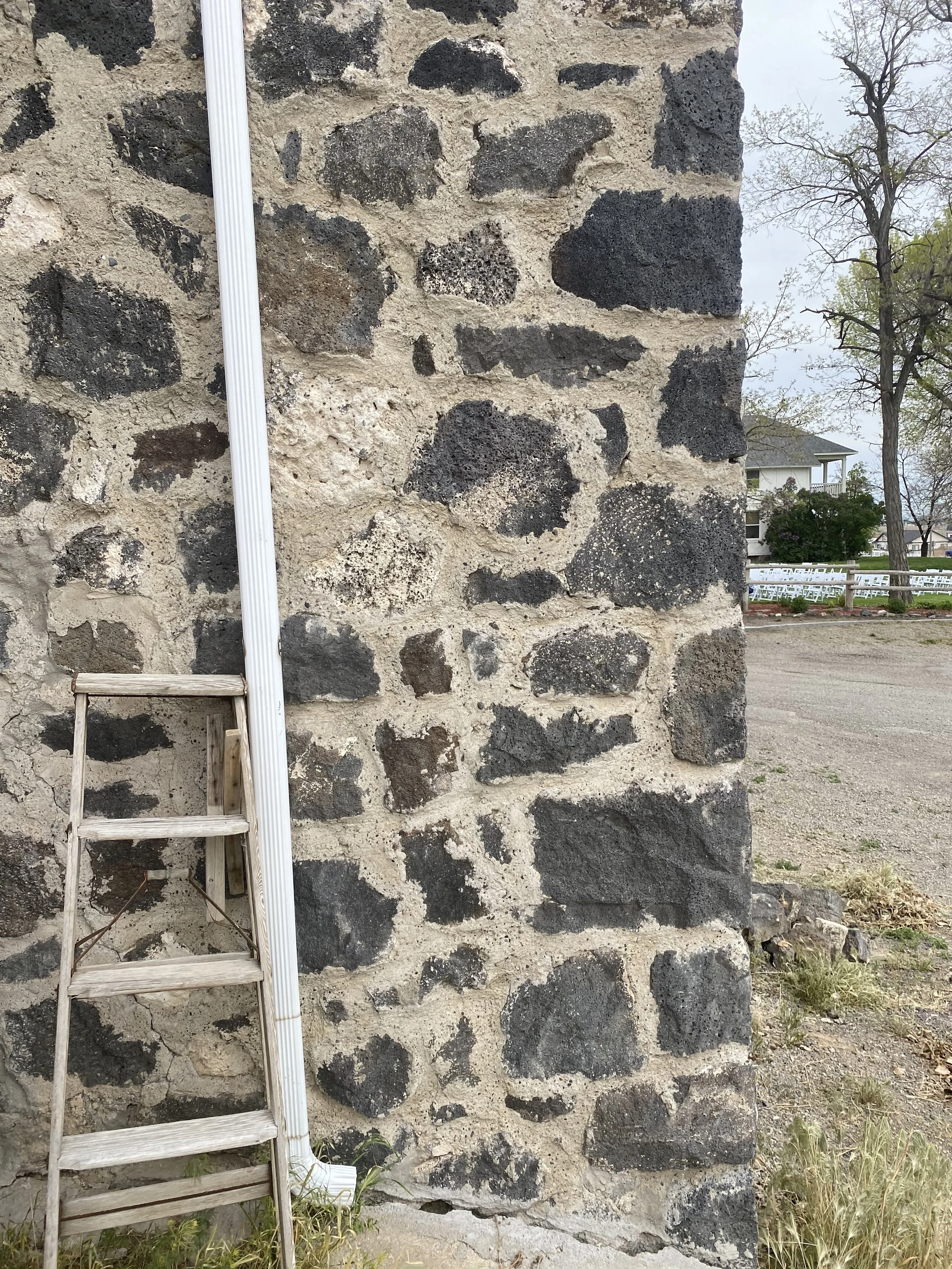
Lava stone building in Jerome, Idaho
I love taking road trips through Idaho. The state is filled with unique places, and there’s no shortage of destinations if you know where to look. As a historian, one of my favorite travel companions is the National Register of Historic Places (NRHP). Established by the National Historic Preservation Act of 1966, the NRHP is a nationwide database that highlights the most historically significant buildings, neighborhoods, and sites across the country. With over 1.5 million registered properties—ranging from ancient Native Hawaiian fishponds and Revolutionary War battlefields to humble farmhouses and grand mansions—each listing has its own unique story and a distinct place in America’s broader narrative.
For my 30th birthday in 2021, I perused the list of Southern Idaho sites, hunting for a compelling day-trip destination. Browsing by county revealed stark contrasts: Bear Lake County, in the far southeastern corner, boasts nearly a hundred listings (thanks largely to Paris Idaho’s significance to the local Mormon community, which earned the entire village a spot on the register). Camas County, on the other hand, has just one—a small rustic cabin built in the 1920s as a summer home by a historically significant shepherd. But it was Jerome County’s 66 listings that caught my eye. As I reviewed them, I realized the common thread wasn’t who owned the buildings or how they were used, but what they were made of: basalt; better known as lava rock.
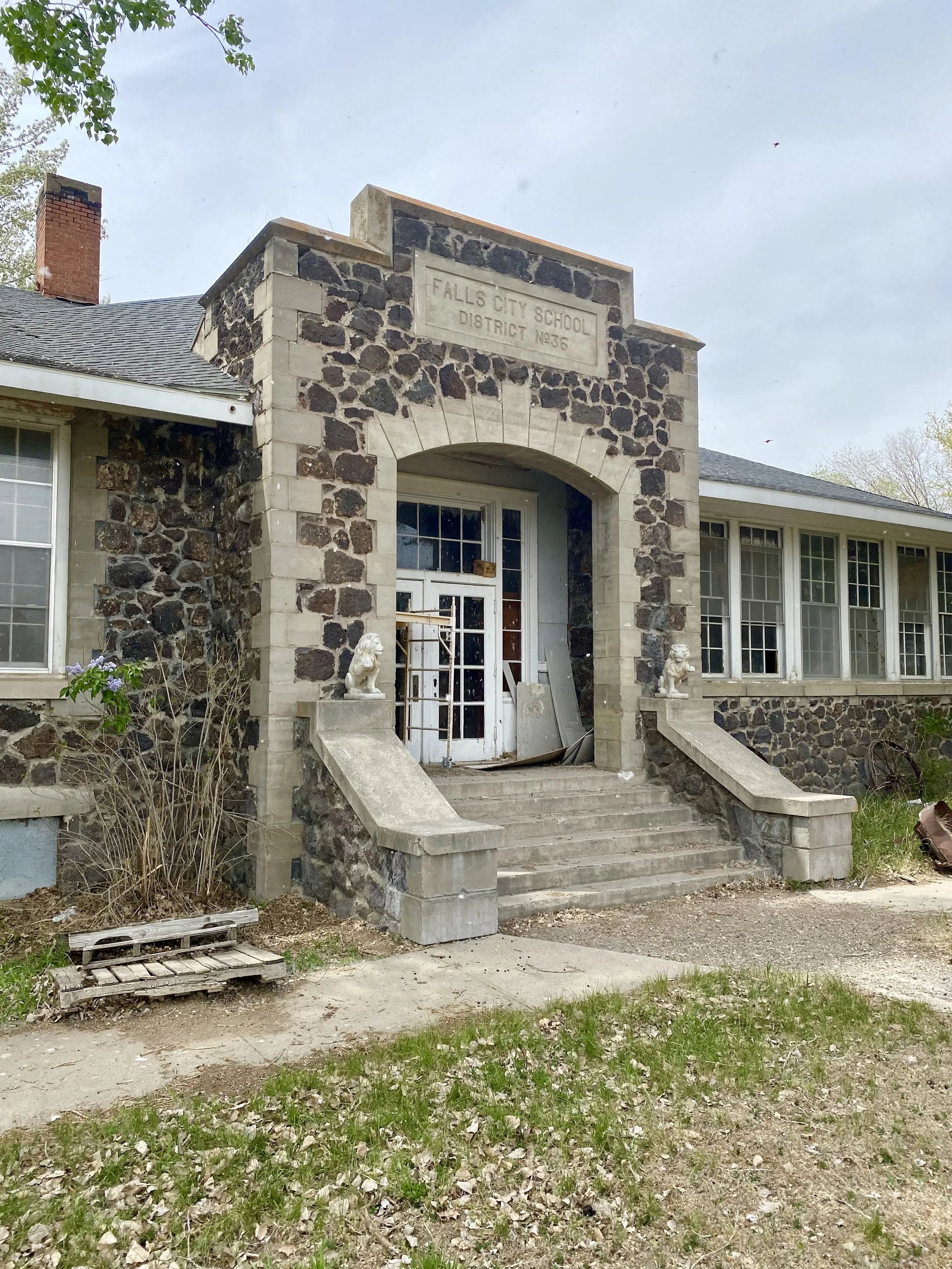
Falls City Schoolhouse built by H.T. Pugh in 1919 showcasing his use of concrete to accent the lava rubble construction.
Jerome, the county seat, is a small town with few natural resources. In the early 1900s, large-scale irrigation projects brought water to the flat, treeless desert, and brave pioneers began transforming the rocky landscape into viable farms, eking out a living in a generally inhospitable place. When the railroad arrived in 1908, few locals could justify the expense of hauling in materials to build the homes, barns, schools, and stores the burgeoning town desperately needed. At the same time, industrious farmers faced the monumental task of clearing their land of the razor-sharp, porous lava rock that covered vast swaths of it. Dams, canal banks, and fences built from the piled stone testify to its abundance—and its popularity as a free, readily available building material. From the basalt, a permanent town began to be born.
The workmanship of these structures varies widely, from crudely built temporary shelters to architect-designed buildings that reflect the period’s aesthetic ideals and the expertise of skilled master masons. One key figure was H.T. Pugh, a Welsh stonemason who perfected lava-rock construction; twenty of his buildings are listed on the NRHP and are the finest examples of the craft. Pugh is noted for using concrete for door lintels, window sills, and corner quoins, creating contrast and architectural sophistication for a material chosen for its ubiquity rather than its beauty. Most buildings were constructed using lava excavated directly from the site, whether during basement digging or land clearing for roads and agriculture. Workers typically pried out the needed rock with crowbars, and while lava’s structure makes it difficult to dress attractively, many masons still selected stones deliberately—choosing by color and size to create aesthetically pleasing and structurally sound buildings. The walls of most lava structures are at least 18 inches thick, some, like icehouses, can be twice that.
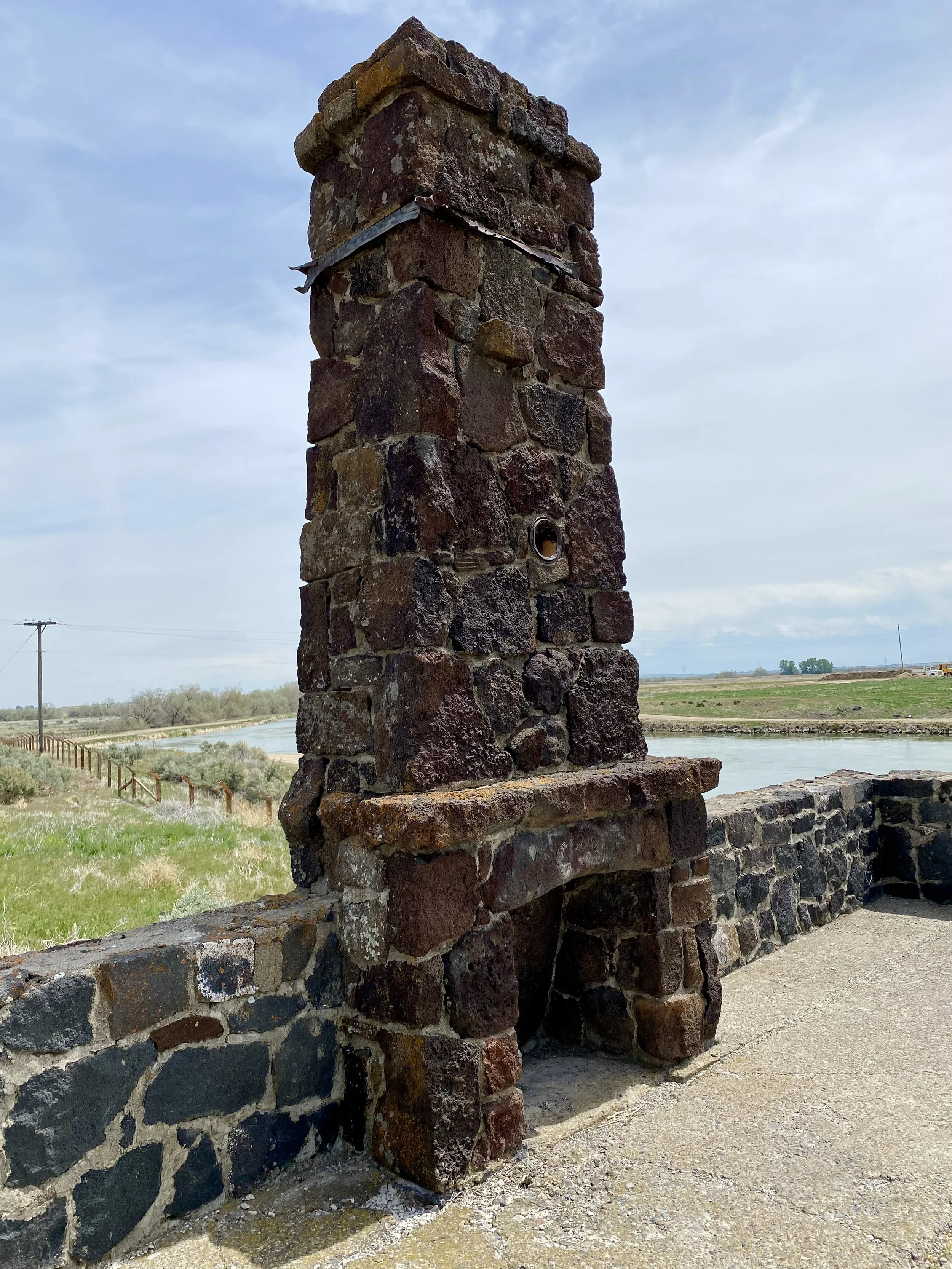
The lava stone fireplace from the former camp’s reception building at Minidoka National Historic Site.
As the cost of skilled labor rose, the savings of using local basalt diminished, and the practice gradually faded. At the Jerome County Historical Museum, Linda Helms opened the archives for me and proved to be an incredible resource on regional history. Through her, I was delighted to discover the work of Marion J. Posey-Ploss, a local architectural historian who conducted a detailed survey of lava-rock buildings in the late 1970s and early 1980s. Though raised in Jerome, Posey-Ploss spent most of her adult life elsewhere, which gave her a sharp appreciation for the uniqueness of lava construction. In retirement, she spearheaded the project to add these buildings to the National Register, and her thorough research remains crucial for understanding the importance of basalt to the architectural history of southwestern Idaho.
Perhaps the last significant use of lava as a building material in the area came during World War II, with the construction of the Minidoka internment camp. Over three years, more than 13,000 Japanese Americans were forcibly imprisoned there in the Idaho desert, victims of racist, xenophobic policies that removed citizens and resident “aliens” of Japanese descent from across the West Coast. Detainees endured brutal conditions and their labor was used to offset local farm-labor shortages caused by the war effort. Linda explained that while the practice was reprehensible, the local community was desperate for workers to keep its farms functioning. Today, at the Minidoka National Historic Site, visitors can see the remains of the reception building: though most buildings were demolished after the war, the chimney and some foundations, crafted from lava stone, still stand.
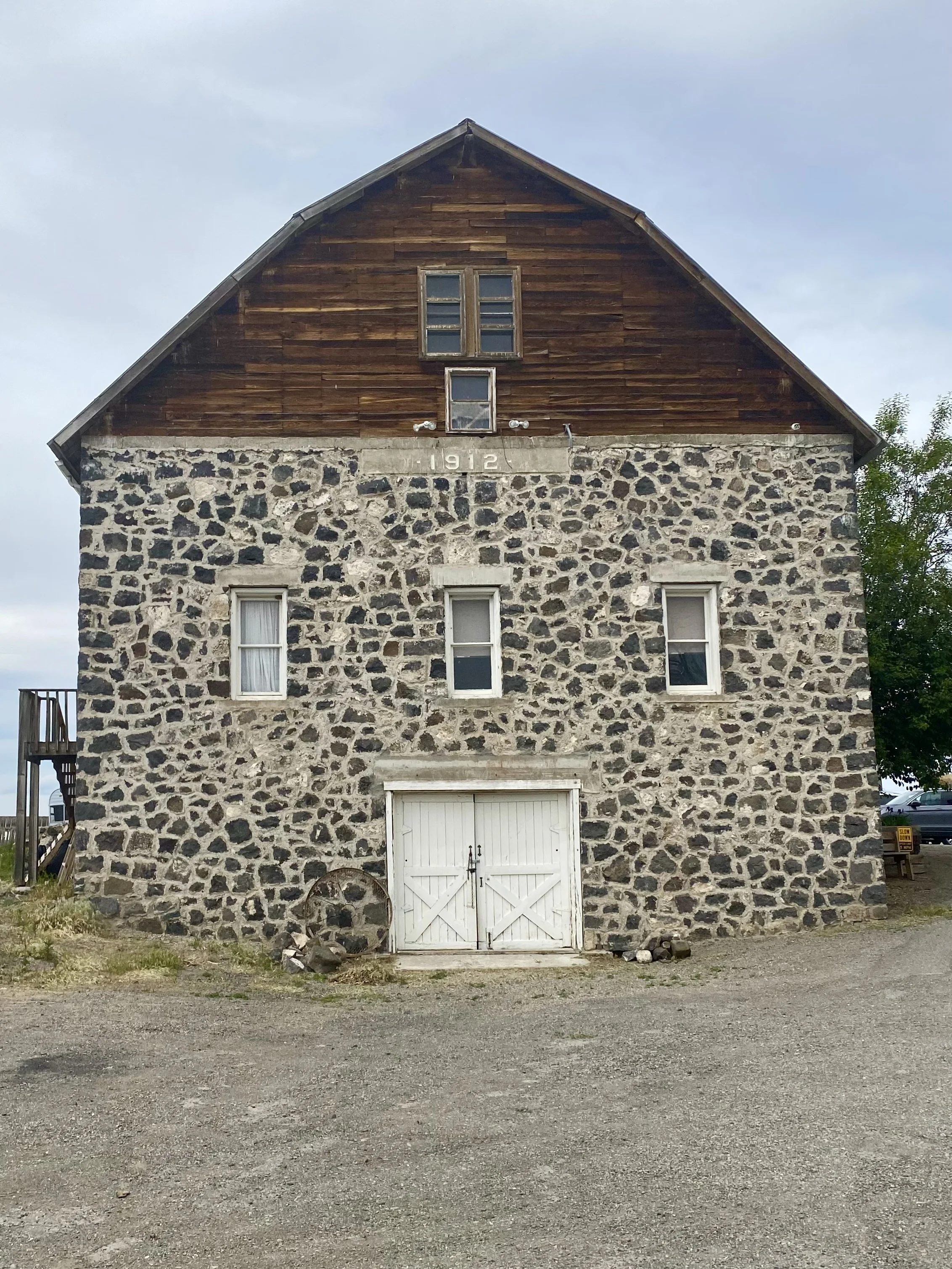
The oldest surviving lava stone building in Jerome, the Mountain View barn, built in 1912 has been transformed into an event center by its current owners.
Because lava-stone structures are so ubiquitous in the region, many locals don’t consider them especially unique. During my visit, my enthusiasm for them was met with mixed reactions. At a convenience store, the clerk admitted to me that she thought the lava stone buildings were ugly and would look better painted. Fortunately, most of the current custodians of basalt buildings that I met appreciate their rustic appeal. The earliest surviving example—the VanWagener/Spanbauer barn at Mountain View Farm in Jerome—has found new life as an event venue, complete with a coffee shop and restaurant. When I visited, the staff were setting up for an upcoming wedding, but co-owner Nina Hollifield took the time to share the barn’s history with me. Her appreciation for the craftsmanship and the adaptive reuse of the building is a fitting tribute to the lasting legacy of this uniquely Idaho material. I came away from my trip with a new-found recognition of lava as not just bedrock, but as a testament to local ingenuity and the pioneer spirit that saw potential where others saw struggle.